



 Mark Sy
The Philippines is moving to CAB Level 14 just as iPhone and AI chip prices are climbing. Different industries, same message: buy now or risk paying more later.
Updated: September 13, 2026
Every few days, another price warning seems to appear.
Book your flight before the fuel surcharge rises. Buy the older iPhone before it gets repriced. Secure the newest gadget before stocks run out.
The pressure behind these increases can be real. The urgency surrounding them can also create powerful FOMO.
So, are companies genuinely struggling with higher costs, or are consumers being trained to panic-buy?
The honest answer is that both can happen at the same time.
The cost increase can be real without every urgent deal being worth taking.

First, it is CAB, not CAAP
Many people search for “CAAP fuel surcharge increase,” but the agency issuing the current passenger fuel surcharge level is the Civil Aeronautics Board or CAB.
CAB regulates the economic side of air transportation, including the fuel surcharge airlines may collect. CAAP is a separate aviation agency.
The latest official CAB advisory covers September 16 to 30, 2026.

What changes on September 16?
The Philippine passenger fuel surcharge will rise from Level 13 to Level 14 for the second half of September.
Under Level 14, the allowable surcharge ranges are:
- Domestic flights: ₱457 to ₱1,336 per passenger
- International flights: ₱1,509.08 to ₱11,220.71 per passenger
For comparison, Level 13 allows ₱423 to ₱1,237 on domestic routes and ₱1,396.74 to ₱10,385.42 on international routes.
This means the surcharge ceiling is increasing by approximately:
- ₱34 to ₱99 for a domestic sector
- ₱112.34 to ₱835.29 for an international sector
The exact amount depends on the distance and route. Airlines must also apply for authority to collect the fee and cannot exceed CAB’s approved ceiling.
The surcharge is separate from the base fare. It is an optional charge airlines may pass on to passengers, not an automatic flat increase applied equally to every ticket. The Level 13 rates and rules show how widely the amount can vary by route.
Most importantly, the applicable window generally follows when the ticket is issued, not when the passenger will travel.
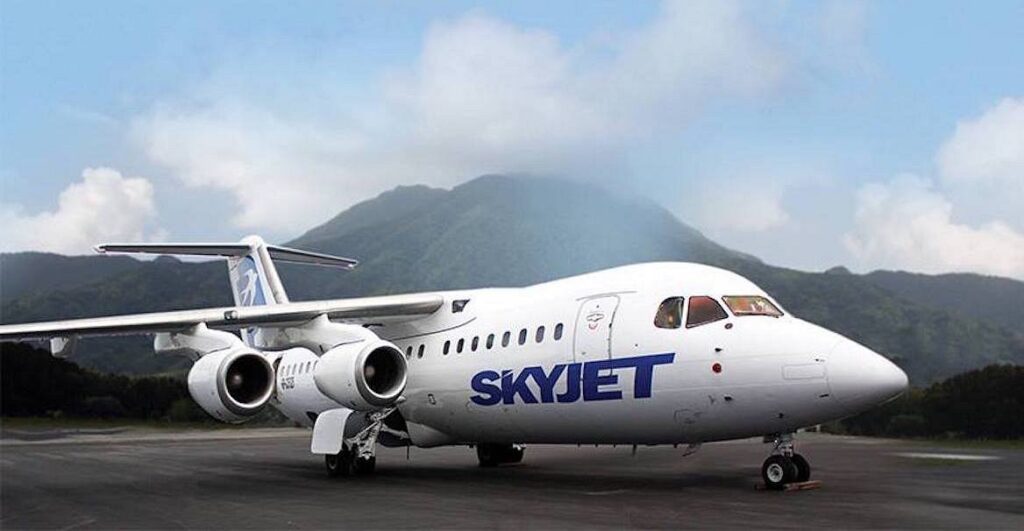
Why does the fuel surcharge keep going up and down?
CAB shifted from monthly adjustments to a temporary 15-day cycle starting in April 2026. The shorter schedule allows surcharge levels to respond faster to changes in jet fuel prices and the peso-dollar exchange rate.
That explains this year’s price whiplash:
- The surcharge reached a record Level 19 in the second half of April.
- It gradually fell to Level 8 by the second half of July.
- It returned to Level 13 in early August.
- It dropped to Level 12 in late August.
- It climbed to Level 13, then Level 14, in September.
CAB says the shortened cycle will remain until market conditions stabilize or the policy is revised or revoked. There is currently no fixed date for its end, according to the explanation of the temporary 15-day surcharge system.
For consumers, it feels unpredictable. Mechanically, it means international fuel and currency movements now reach airfare checkout pages much faster.
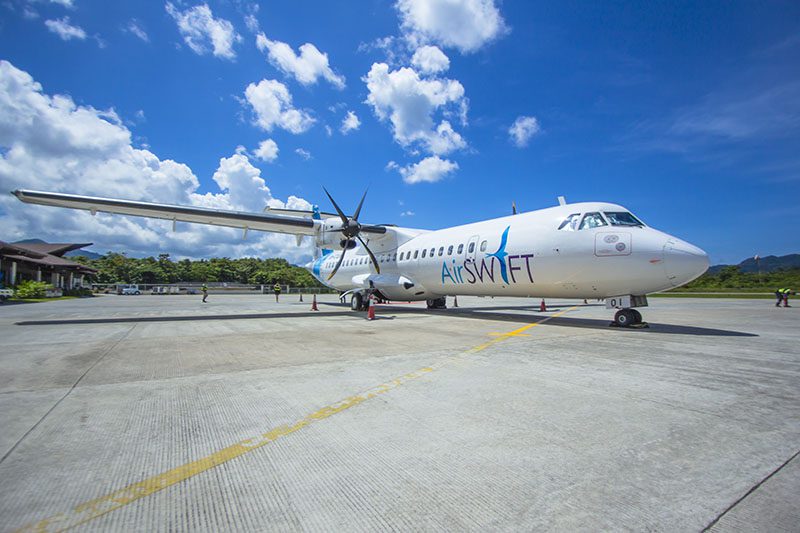
Is the fuel surcharge a strategy to create FOMO?
There is no evidence that CAB created the surcharge adjustments to make travelers panic-book flights.
The surcharge level is a regulated ceiling linked to fuel costs. It can rise, fall, or remain unchanged.
However, the news surrounding an increase can still become a useful marketing tool.
The pattern is easy to recognize:
- CAB announces a higher surcharge before the next 15-day period.
- Headlines warn that airfares may increase.
- Airlines promote seat sales with urgent booking deadlines.
- Travelers rush to secure tickets before the cutoff.
- The cheapest available seats disappear as demand rises.
That creates a real feedback loop. Even if the surcharge increase is legitimate, the rush it produces can push base fares higher or remove the lowest inventory.
A lower surcharge also does not guarantee a cheaper final ticket. Airlines still use dynamic base fares based on demand, season, route popularity and remaining seats.
The countdown may be real, but it does not automatically mean the current fare is good.

First iPhone prices, then AI chips. What is happening in 2026?
Airline fuel surcharges and smartphone pricing do not follow the same system, but they create a similar consumer experience.
Apple increased the starting prices of the iPhone 18 Pro models by $100 in the United States. Existing iPhone prices in India rose by as much as 41 percent after the latest launch. These are overseas price changes and should not be treated as confirmed Philippine pricing, but they show the pressure affecting the wider market. Reuters reported that Apple cited rising memory and storage costs.
The AI boom is consuming enormous amounts of high-bandwidth memory or HBM. Producing it requires more manufacturing capacity and can be more profitable than conventional memory used in phones and laptops.
Phone memory and AI memory are not identical products. However, they depend on a highly concentrated group of manufacturers deciding how to allocate limited production capacity.
The result is spreading across the market:
- AI infrastructure companies are competing for limited memory supplies.
- Smartphone and computer makers are paying more for components.
- Manufacturers are prioritizing premium products with higher margins.
- Older devices may no longer receive the usual price cuts.
- Companies are using AI features to justify more expensive models.
Some Chinese AI chipmakers have also raised indicated processor prices by 20 to 50 percent as HBM shortages and export restrictions increase their costs, according to Reuters.
This is not necessarily one coordinated plan. It is a combination of real scarcity, geopolitical risk, concentrated suppliers, corporate pricing decisions and consumers willing to pay to avoid missing out.

When will the fuel surcharge and chip price increases end?
For airline fuel surcharges, there is no definite date.
CAB can lower the level during the next 15-day cycle if jet fuel prices and currency conditions improve. It has already moved downward several times this year. However, another global supply disruption can quickly reverse that progress.
The technology problem may take longer. Industry estimates cited by The Verge suggest memory supply may not begin catching up with demand until late 2027 or early 2028 in a best-case scenario.
Prices may stabilize before they actually return to previous levels.
How to save on flights despite the surcharge
1) Compare the final checkout price
Ignore the headline base fare until you see the amount after the surcharge, taxes, baggage, seat selection and payment fees.
2) Track the same itinerary
Use fare alerts and compare the same dates, baggage allowance and flight times. A “cheaper” flight with added baggage and a connection may cost more overall.
3) Book before an increase only when your dates are firm
If your trip is confirmed and the current total already fits your budget, booking before a known surcharge increase can make sense.
Do not buy a restrictive or non-refundable ticket only to avoid a possible ₱34 domestic increase. The cost of changing the trip may be much higher than the surcharge you avoided.
4) Compare direct and connecting flights
Fuel surcharges may be collected per flight sector. An itinerary with more connections can carry more fees even when its advertised base fare looks lower.
5) Use card offers carefully
Bank discounts, miles and installment promos can reduce the real cost. Check whether the offer applies to the total fare, base fare only, or selected booking channels.
A discount loses its value if the installment carries interest or the required spending is unnecessary.
How to save on iPhones, computers and other gadgets
1) Wait for official Philippine pricing
Do not convert a US price directly into pesos and assume that will be the local price. Taxes, distribution costs, currency rates and launch schedules can change the final amount.
2) Compare older models again
Previous-generation devices are not automatically cheaper this year. Check current prices from authorized sellers instead of relying on the old launch price.
3) Buy the storage you will actually use
The jump between storage tiers can be substantial. Review your current usage before paying for capacity you may never need.
4) Separate the discount from the payment plan
Calculate the final amount after trade-in value, interest, processing fees and required mobile plans. A large monthly discount may lock you into a more expensive contract.
5) Do not preorder only because stock looks limited
Launch-day availability can be tight, but supply often improves. Buy early only when you genuinely need the device and the upgrade is worth its full cost.
The Coupon Grocer rule: Do not chase the lowest advertised price. Look for the lowest final cost that still makes sense after the countdown disappears.
Frequently Asked Questions
1) Did CAAP increase the fuel surcharge?
No. The current fuel surcharge advisory was issued by the Civil Aeronautics Board or CAB, not CAAP.
2) What is the Philippine fuel surcharge level for September 16 to 30, 2026?
CAB has set the allowable passenger fuel surcharge at Level 14.
3) Is every airline required to collect the maximum Level 14 amount?
No. The surcharge is optional, requires CAB authority and cannot exceed the approved ceiling. Actual charges may differ by airline and route.
4) Will a lower fuel surcharge automatically make flights cheaper?
Not necessarily. The surcharge may fall while the airline’s base fare rises because of demand, seasonality or limited seat inventory.
5) Should I book before September 16?
Consider booking if your dates are confirmed and the final checkout price is already acceptable. Do not book solely because of a headline, especially if the ticket has costly cancellation or rebooking conditions.
Coupon Grocer Disclaimer
This article is provided for general information and shopping guidance. Fuel surcharge levels, airfares, taxes, airline fees, promotional terms, gadget prices and availability can change without notice. CAB establishes allowable surcharge ceilings, while individual airlines may apply different approved amounts.
Always verify the final checkout total and official terms before purchasing. Coupon Grocer is not affiliated with CAB, CAAP, Apple or the companies mentioned unless expressly stated. Some links may lead to third-party websites. A commercial or affiliate relationship will be disclosed when applicable.
To Collaborate
Are you an airline, bank, card issuer, retailer, hotel, restaurant, tourism business or verified promo partner with an offer our readers should know about?
Send your promotion, correction or collaboration proposal to contribute@coupongrocer.com, or visit the Coupon Grocer Contact page.